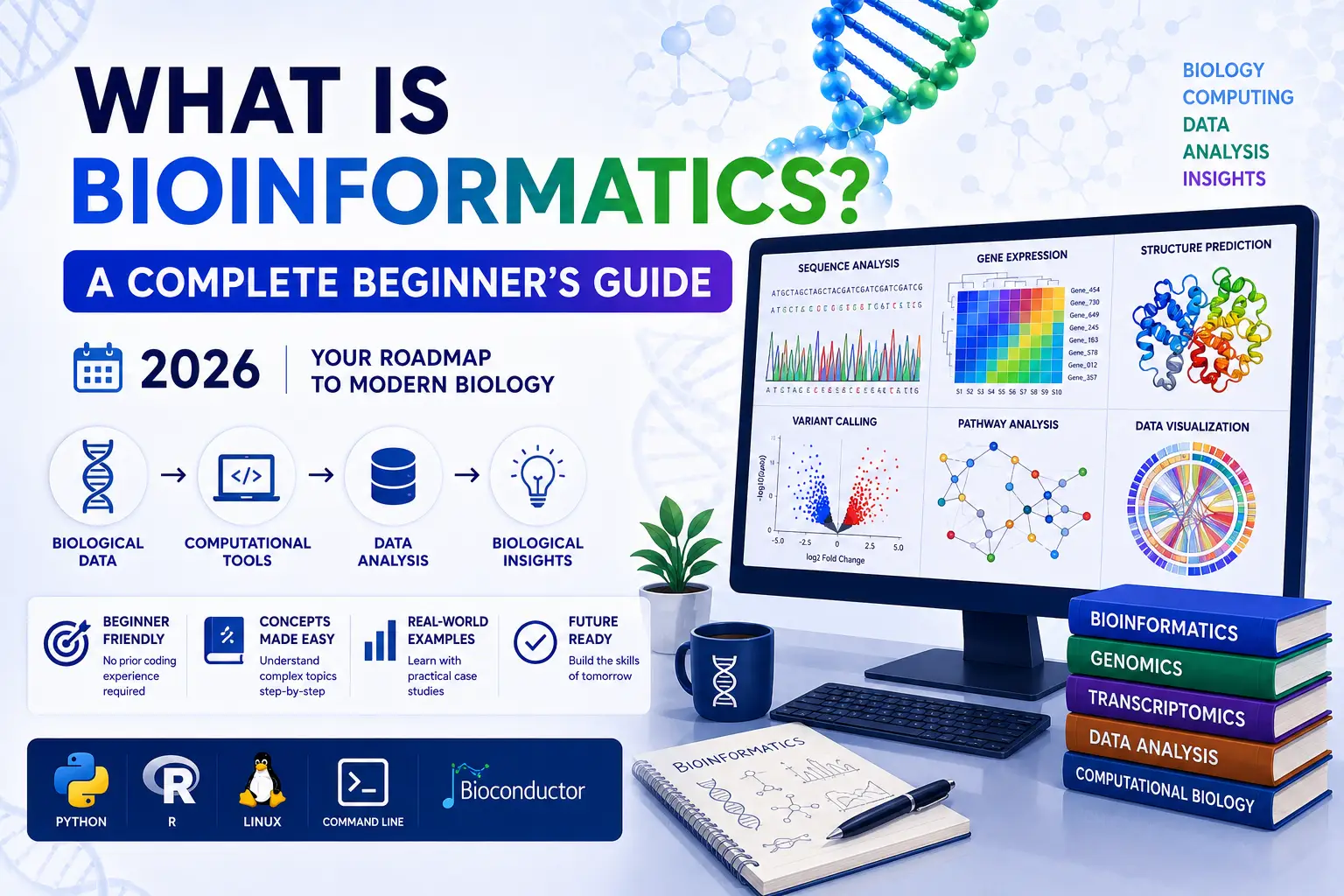
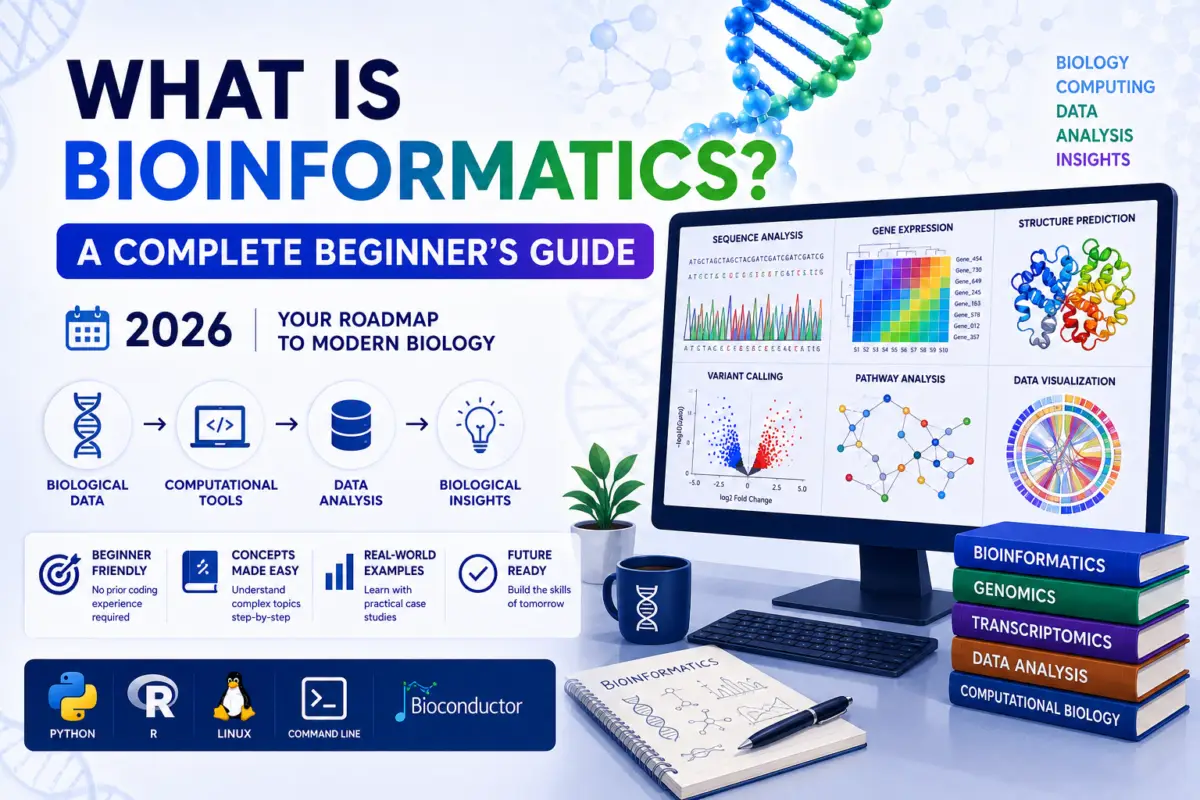
Modern biology generates enormous amounts of data every day. From DNA sequencing and gene expression studies to drug discovery and personalized medicine, researchers need powerful computational methods to analyze and interpret biological information. This is where bioinformatics comes in.
Bioinformatics is one of the fastest-growing interdisciplinary fields, combining biology, computer science, statistics, and data science to solve complex biological problems. Whether you’re a biology student, a computer science enthusiast, a researcher, or someone exploring career opportunities in life sciences, understanding bioinformatics is becoming increasingly important.
In this guide, we’ll explore what bioinformatics is, why it matters, its applications, career opportunities, and how beginners can start learning it.
What Is Bioinformatics?
Bioinformatics is the application of computational tools, algorithms, and statistical methods to store, analyze, interpret, and visualize biological data.
Simply put, bioinformatics helps scientists make sense of large biological datasets that would be impossible to analyze manually.
The field combines three major disciplines:
- Biology
- Computer Science
- Statistics and Data Analysis
Bioinformatics enables researchers to understand genetic information, identify disease-causing mutations, analyze protein structures, discover new drugs, and uncover biological patterns hidden within massive datasets.
Why Is Bioinformatics Important?
Advances in biotechnology have dramatically increased the amount of biological data generated worldwide.
For example:
- A single human genome contains approximately 3 billion DNA base pairs.
- Modern sequencing technologies can generate terabytes of genomic data in a single project.
- Research laboratories produce large-scale transcriptomic, proteomic, and metabolomic datasets.
Without computational approaches, analyzing this data would take years.
Bioinformatics allows scientists to:
- Process biological data efficiently
- Identify meaningful patterns
- Discover disease biomarkers
- Understand evolutionary relationships
- Accelerate drug development
- Support precision medicine initiatives
Today, bioinformatics is essential in academic research, healthcare, biotechnology, agriculture, and pharmaceutical industries.
How Does Bioinformatics Work?
Bioinformatics follows a general workflow:
1. Data Collection
Biological data is generated using technologies such as:
- DNA sequencing
- RNA sequencing
- Proteomics experiments
- Metabolomics studies
- Medical imaging
- Clinical research
2. Data Storage
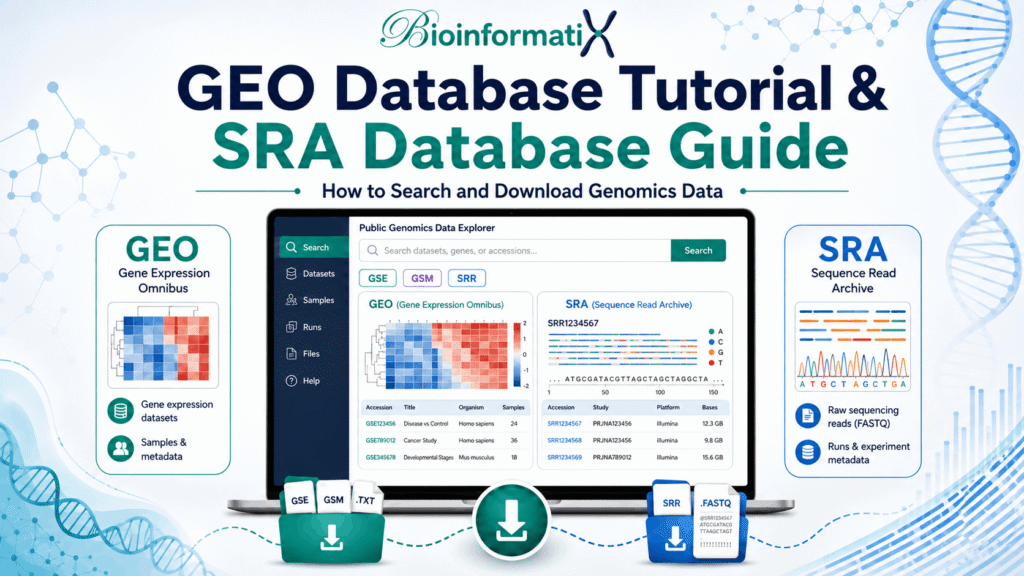
The generated data is stored in databases such as:
- GenBank
- UniProt
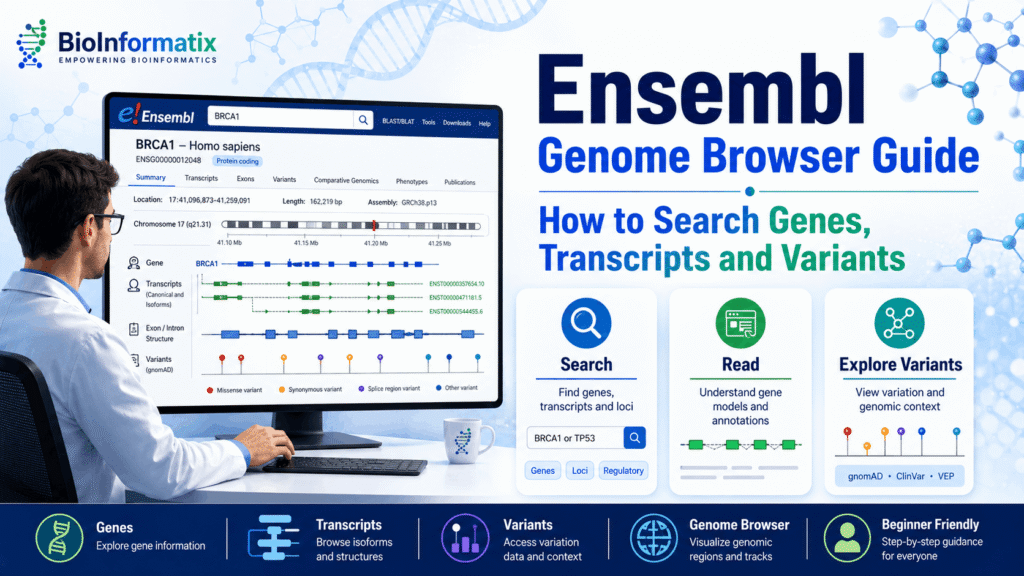
- Ensembl
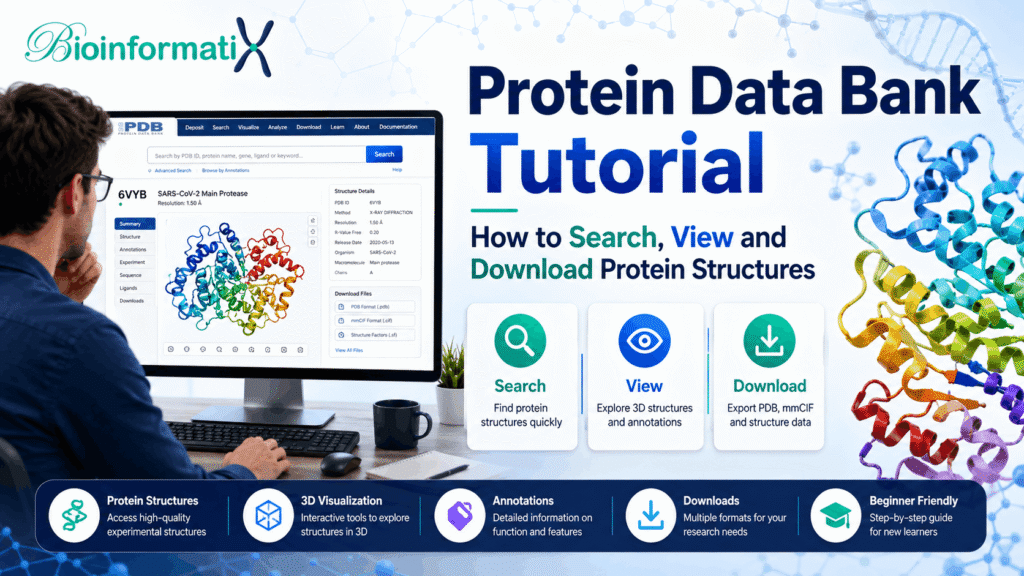
- Protein Data Bank (PDB)
3. Data Processing
Researchers use computational tools to:
- Clean raw data
- Remove errors
- Align sequences
- Identify variants
- Quantify gene expression
4. Data Analysis
Statistical and computational methods are applied to:
- Detect patterns
- Compare samples
- Identify significant biological changes
- Generate hypotheses
5. Visualization and Interpretation
Results are visualized using graphs, heatmaps, networks, and dashboards to support biological conclusions.
Major Areas of Bioinformatics
Bioinformatics covers multiple specialized domains.
Genomics
Genomics focuses on studying entire genomes.
Applications include:
- Genome assembly
- Variant analysis
- Genome annotation
- Comparative genomics
Transcriptomics
Transcriptomics studies RNA molecules and gene expression.
Researchers use transcriptomic analysis to:
- Understand disease mechanisms
- Identify differentially expressed genes
- Discover biomarkers
Proteomics
Proteomics investigates proteins and their functions.
Applications include:
- Protein identification
- Protein structure prediction
- Protein interaction analysis
Metagenomics
Metagenomics studies microbial communities directly from environmental samples.
Common applications include:
- Gut microbiome analysis
- Environmental monitoring
- Agricultural research
Structural Bioinformatics
This field focuses on analyzing biological structures.
Examples include:
- Protein folding
- Molecular docking
- Drug-target interactions
Systems Biology
Systems biology examines how biological components interact within complex systems.
Researchers build computational models to understand cellular behavior and disease progression.
Common Bioinformatics Tools
Bioinformaticians rely on a variety of software tools and databases.
Popular tools include:
BLAST
Used to compare DNA, RNA, and protein sequences against biological databases.
Clustal Omega
Performs multiple sequence alignment.
Galaxy
Provides a user-friendly platform for bioinformatics workflows.
MEGA
Used for phylogenetic and evolutionary analysis.
PyMOL
Visualizes three-dimensional protein structures.
R and Python
Widely used programming languages for data analysis, visualization, and machine learning.
Applications of Bioinformatics
Bioinformatics has transformed many scientific and industrial fields.
Healthcare and Precision Medicine
Bioinformatics helps identify genetic variants associated with diseases.
Applications include:
- Cancer genomics
- Rare disease diagnosis
- Personalized treatment strategies
Drug Discovery
Researchers use bioinformatics to:
- Identify drug targets
- Predict drug interactions
- Screen potential compounds
This significantly reduces the time and cost required for drug development.
Agriculture
Bioinformatics supports:
- Crop improvement
- Disease-resistant plant development
- Livestock breeding programs
Biotechnology
Companies use bioinformatics to develop:
- Diagnostic tools
- Therapeutic products
- Industrial enzymes
Evolutionary Biology
Researchers study evolutionary relationships among organisms through sequence analysis and phylogenetics.
Skills Required for Bioinformatics
Successful bioinformaticians typically develop expertise in several areas.
Biological Knowledge
Understanding:
- Molecular biology
- Genetics
- Genomics
- Cell biology
Programming
Common languages include:
- Python
- R
- Bash
Statistics
Important concepts include:
- Hypothesis testing
- Experimental design
- Data visualization
- Machine learning
Data Analysis
Professionals must learn how to process, analyze, and interpret large datasets effectively.
Linux
Many bioinformatics tools operate within Linux environments, making command-line skills highly valuable.
Career Opportunities in Bioinformatics
The demand for bioinformatics professionals continues to grow globally.
Common career roles include:
- Bioinformatician
- Computational Biologist
- Genomics Data Analyst
- Clinical Bioinformatics Scientist
- Research Associate
- Biostatistician
- Data Scientist in Life Sciences
- Drug Discovery Scientist
Industries hiring bioinformatics professionals include:
- Pharmaceutical companies
- Biotechnology firms
- Hospitals
- Research institutes
- Universities
- Government organizations
Is Bioinformatics a Good Career?
Bioinformatics offers several advantages:
- High demand worldwide
- Interdisciplinary skill development
- Opportunities in research and industry
- Competitive salaries
- Ability to contribute to healthcare innovation
As artificial intelligence and big data continue to reshape biological research, bioinformatics professionals are becoming increasingly valuable.
How to Start Learning Bioinformatics
If you’re new to the field, follow this roadmap:
Step 1: Learn Basic Biology
Focus on:
- Genetics
- Molecular biology
- Cell biology
Step 2: Learn Python
Python is one of the most important programming languages in bioinformatics.
Topics to learn:
- Variables
- Loops
- Functions
- Data structures
- Data analysis libraries
Step 3: Learn Linux
Practice:
- File management
- Shell commands
- Scripting
Step 4: Learn Statistics
Understand:
- Probability
- Hypothesis testing
- Data visualization
Step 5: Explore Bioinformatics Tools
Start with:
- BLAST
- NCBI databases
- Galaxy
- Clustal Omega
Step 6: Work on Projects
Build practical experience through:
- Sequence analysis projects
- RNA-Seq analysis
- Genome annotation studies
- Public biological datasets
The Future of Bioinformatics
Bioinformatics is evolving rapidly with advances in:
- Artificial Intelligence
- Machine Learning
- Multi-omics Analysis
- Precision Medicine
- Drug Discovery
- Single-Cell Genomics
Researchers increasingly rely on computational methods to answer biological questions that were previously impossible to investigate.
As biological data continues to grow exponentially, bioinformatics will remain at the center of modern scientific discovery.
Final Thoughts
Bioinformatics bridges the gap between biology and technology, enabling researchers to transform biological data into meaningful scientific insights. From disease diagnosis and personalized medicine to drug discovery and agricultural innovation, bioinformatics plays a critical role in solving some of the world’s most important challenges.
For students and professionals interested in biology, data science, or healthcare technology, bioinformatics offers an exciting and rewarding career path with enormous growth potential.
The best time to start learning bioinformatics is now.