
Description
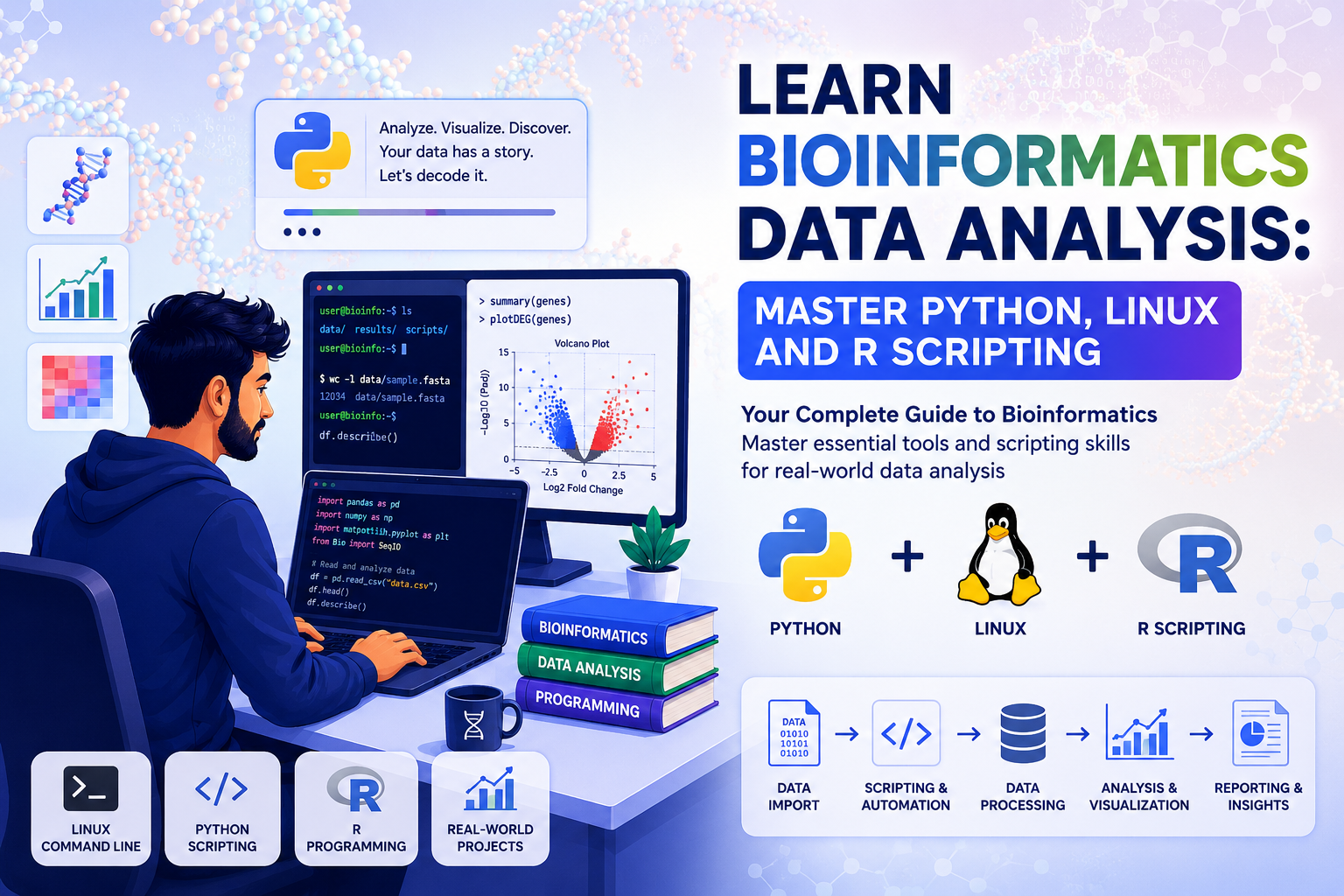
Bioinformatics Data Analysis: Master Python, Linux & R Through Hands-On Projects
Bioinformatics Data Analysis is one of the most valuable skills in modern genomics, biotechnology, computational biology, and life science research. This comprehensive, project-based course is designed to teach you how to analyze biological data using the three most essential technologies in bioinformatics: Python, Linux, and R.
Whether you’re a beginner, a student, a researcher, or a professional looking to transition into bioinformatics, this course provides a complete roadmap for mastering Bioinformatics Data Analysis through practical exercises, real-world datasets, and industry-standard workflows.
By the end of this course, you’ll confidently build bioinformatics pipelines, automate biological data analysis, perform RNA-Seq analysis, and use Python, Linux, and R to solve real biological problems.
What You’ll Learn in This Bioinformatics Data Analysis Course
This Bioinformatics Data Analysis course combines programming, scripting, and biological data analysis into one complete learning experience.
Python for Bioinformatics
Master Python from beginner to advanced while learning how it is applied in computational biology.
You’ll learn how to:
- Write Python programs from scratch
- Work with DNA, RNA, and protein sequences
- Use the Biopython library
- Read and process FASTA, FASTQ, GFF, and VCF files
- Perform sequence alignment
- Automate BLAST searches
- Build reusable bioinformatics scripts
- Visualize biological datasets using Python
Linux for Bioinformatics
Linux is the foundation of modern bioinformatics workflows.
In this section, you’ll learn to:
- Navigate the Linux command line
- Manage files and directories
- Install bioinformatics software
- Use Bash scripting for workflow automation
- Retrieve biological datasets from online databases
- Execute command-line bioinformatics tools efficiently
These skills are essential for working in research laboratories, high-performance computing environments, and cloud-based bioinformatics platforms.
RNA-Seq Data Analysis Using Linux
Gain practical experience with one of the most widely used genomic technologies.
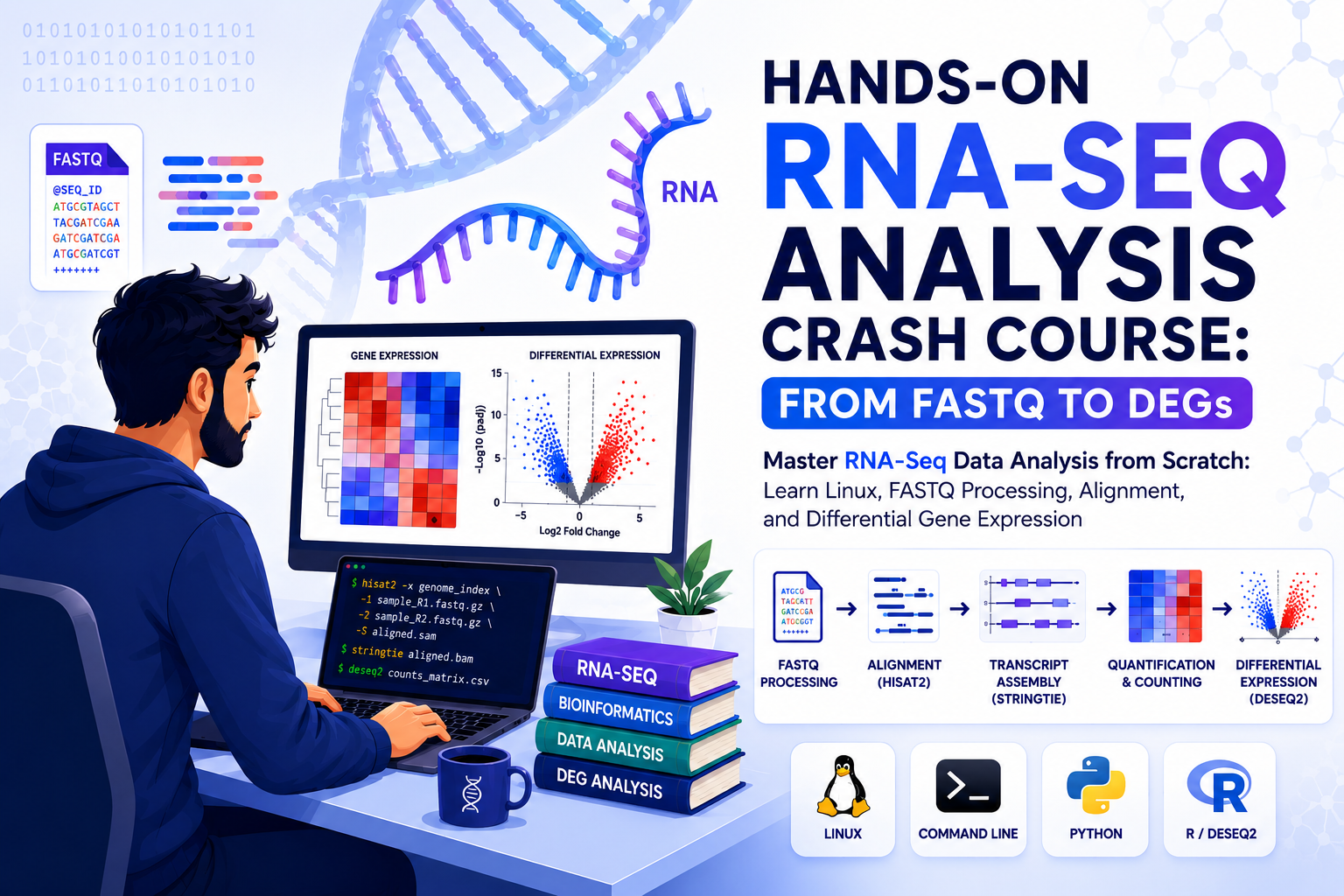
You’ll learn the complete RNA-Seq workflow, including:
- FASTQ quality assessment
- Data preprocessing
- Adapter trimming
- Read alignment
- Gene expression quantification
- Differential gene expression analysis
- Biological interpretation of results
Work with professional bioinformatics tools such as:
- FastQC
- Fastp
- BWA
- HISAT2
- STAR
- featureCounts
- HTSeq
R Programming for Bioinformatics
Learn how R is used for statistical analysis and visualization of biological data.
Topics include:
- R programming fundamentals
- RStudio
- Data cleaning and manipulation
- Biological data visualization
- Differential gene expression analysis
- DESeq2
- edgeR
- Gene Set Enrichment Analysis (GSEA)
- Publication-quality plots using ggplot2
Hands-On Bioinformatics Projects
This Bioinformatics Data Analysis course emphasizes learning through practice.
You’ll complete real-world projects such as:
- Python programming for biological sequence analysis
- Linux workflow automation
- RNA-Seq data processing
- Gene expression analysis
- Biological data visualization
- Sequence manipulation
- Bioinformatics scripting
- Data retrieval from public databases
Every project is designed to simulate workflows commonly used in research institutions, universities, biotechnology companies, and pharmaceutical organizations.
Course Structure
The course consists of four comprehensive modules:
Module 1 – Python for Bioinformatics
Develop Python programming skills specifically for biological data analysis.
Module 2 – Linux for Bioinformatics
Master Linux commands, Bash scripting, and workflow automation.
Module 3 – RNA-Seq Data Analysis
Learn a complete RNA-Seq pipeline from FASTQ files to differential gene expression analysis.
Module 4 – R for Bioinformatics
Perform statistical analysis, biological data visualization, and transcriptomic analysis using R.
Each module includes:
- Step-by-step video lectures
- Practical demonstrations
- Coding exercises
- Hands-on assignments
- Downloadable resources
- Real-world projects
Software and Tools You’ll Use
Throughout this Bioinformatics Data Analysis course, you’ll gain experience with professional tools used worldwide, including:
- Python
- Biopython
- Linux
- Bash
- R
- RStudio
- FastQC
- Fastp
- BWA
- HISAT2
- STAR
- featureCounts
- HTSeq
- DESeq2
- edgeR
- ggplot2
- BLAST
Who Should Enroll?
This course is perfect for:
- Bioinformatics students
- Biology students
- Biotechnology students
- Computational biology researchers
- Genomics researchers
- Transcriptomics researchers
- Life science professionals
- Master’s and PhD students
- Healthcare researchers
- Data analysts entering bioinformatics
No previous programming experience is required. Python, Linux, and R are taught from the fundamentals, making this course beginner-friendly.
Why Choose This Bioinformatics Data Analysis Course?
✔ Learn Python, Linux, and R in one complete course
✔ Build practical bioinformatics programming skills
✔ Perform real RNA-Seq data analysis
✔ Automate bioinformatics workflows
✔ Analyze biological datasets using industry-standard tools
✔ Work on hands-on projects with real biological data
✔ Beginner-friendly, step-by-step instruction
✔ Prepare for careers in bioinformatics, genomics, biotechnology, and computational biology
Prerequisites
All you need is:
- A Windows, macOS, or Linux computer
- Internet access
- Basic biology knowledge (helpful but not required)
- A willingness to learn programming and bioinformatics
No prior experience with Python, Linux, R, or bioinformatics is necessary.
Start Your Bioinformatics Data Analysis Journey Today
If you want to master Bioinformatics Data Analysis using Python, Linux, and R while gaining practical experience with real-world bioinformatics workflows, this course is the perfect place to start.
Enroll today and develop the programming, scripting, and computational skills needed for modern genomics, transcriptomics, biotechnology, and life science research.

Reviews
There are no reviews yet.