About Bundle
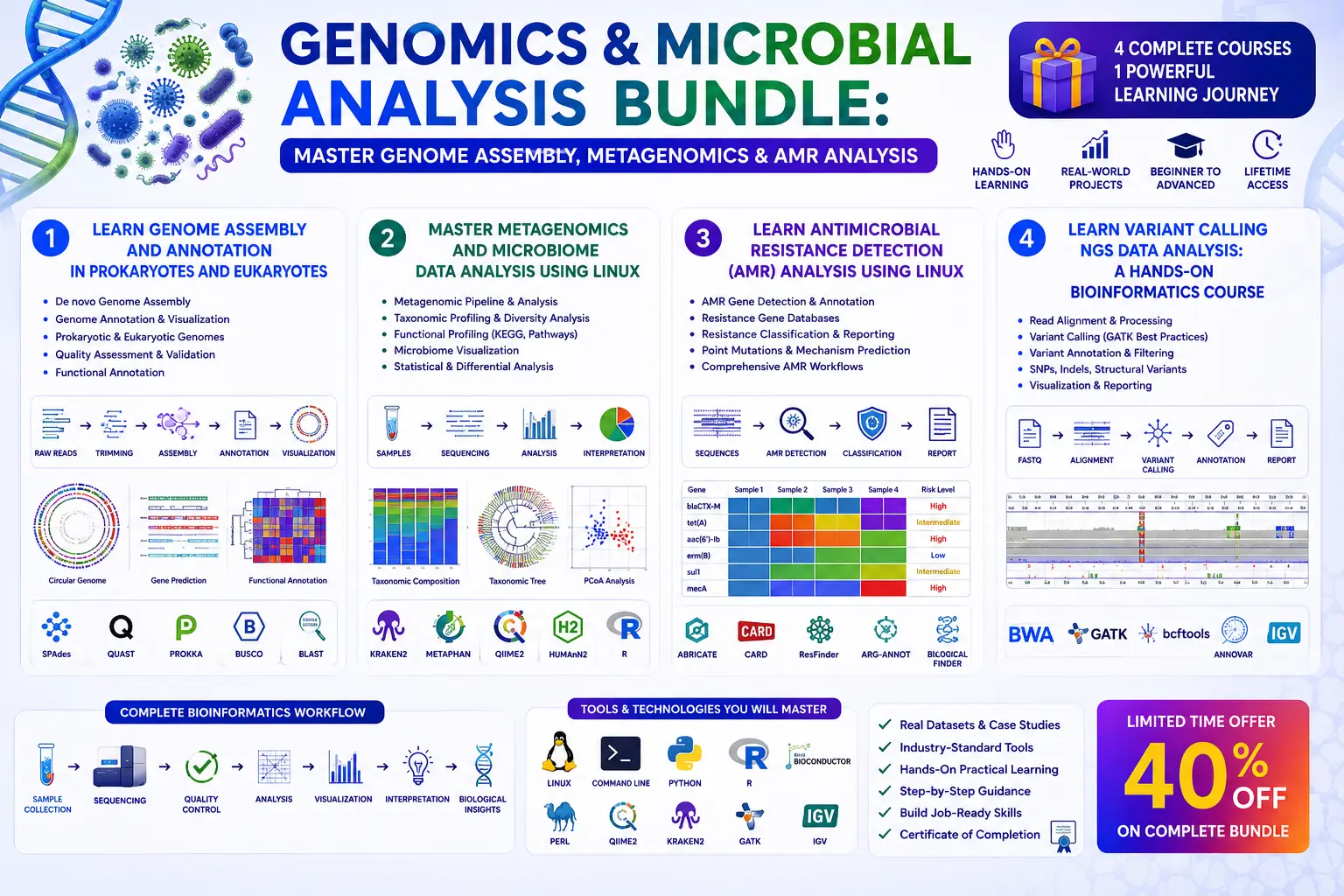
Genomics & Microbial Analysis Bundle: Master Genome Assembly, Metagenomics & AMR Analysis
Unlock the power of microbial genomics and modern sequencing technologies with the Genomics & Microbial Analysis Bundle, a comprehensive training program designed for students, researchers, microbiologists, and bioinformaticians who want to analyze microbial genomes from raw sequencing data to biological discovery.
Microbial genomics is transforming healthcare, biotechnology, agriculture, environmental science, and infectious disease research. With advances in next-generation sequencing (NGS), researchers can now assemble complete genomes, study microbial communities, detect antimicrobial resistance genes, and identify genomic variants at unprecedented scale and accuracy.
This hands-on bundle provides practical experience with the most important workflows used in microbial genomics research. You will learn how to assemble and annotate prokaryotic and eukaryotic genomes, analyze microbiome and metagenomics datasets, detect antimicrobial resistance (AMR) genes, and perform genomic variant analysis using industry-standard bioinformatics tools and real-world datasets.
Throughout the bundle, you’ll work with Linux-based bioinformatics pipelines and learn how to use tools such as SPAdes, Flye, Prokka, BLAST, Kraken2, Bracken, Krona, ABRicate, Quast, BWA, Samtools, and many more. Every course emphasizes practical implementation, helping you build the skills needed to conduct independent research and solve real biological problems.
Whether your goal is microbial genomics research, public health surveillance, infectious disease analysis, microbiome research, biotechnology, or academic research, this bundle provides the technical foundation and hands-on experience required for success.
Courses Included
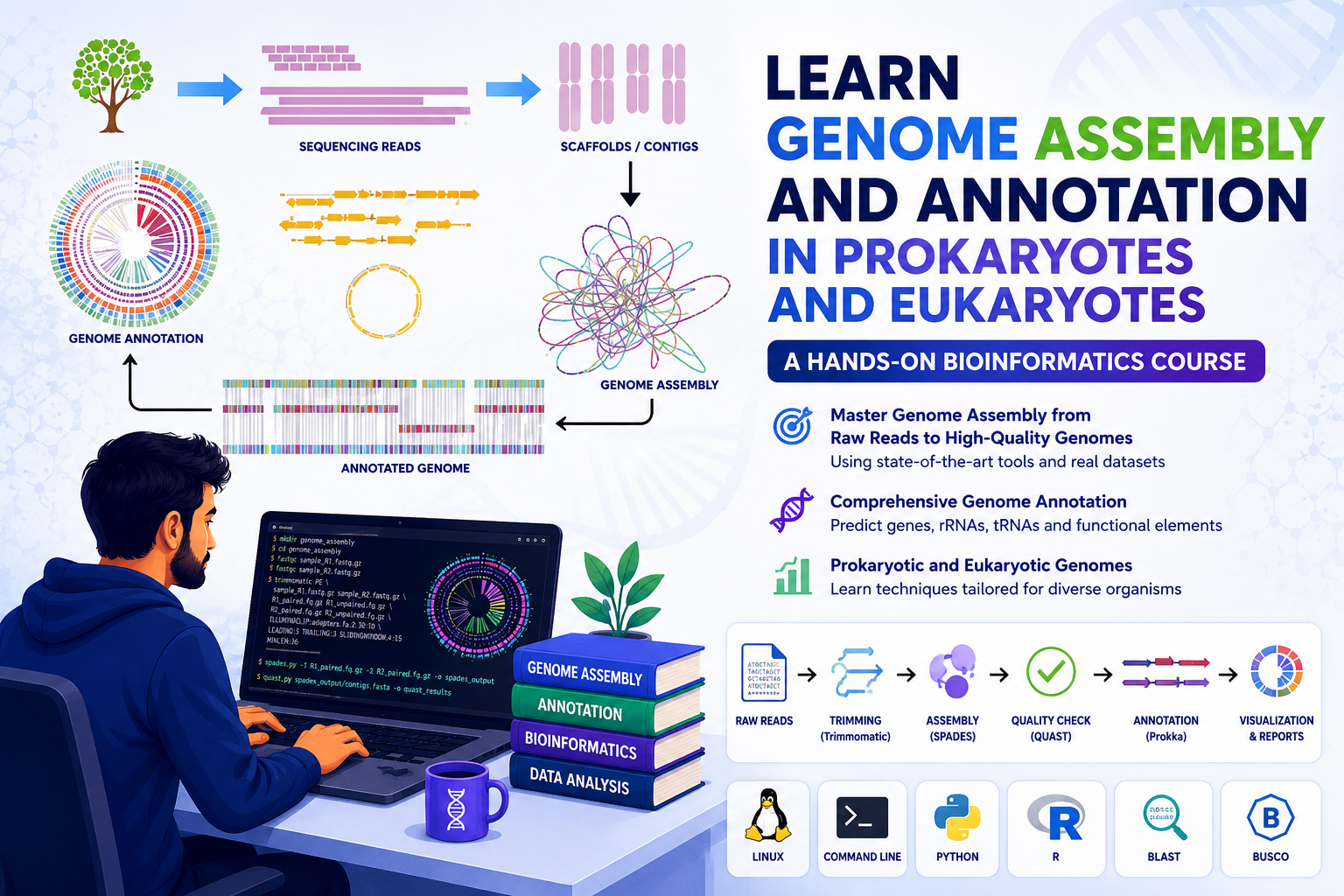
✅ Learn Genome Assembly and Annotation in Prokaryotes and Eukaryotes
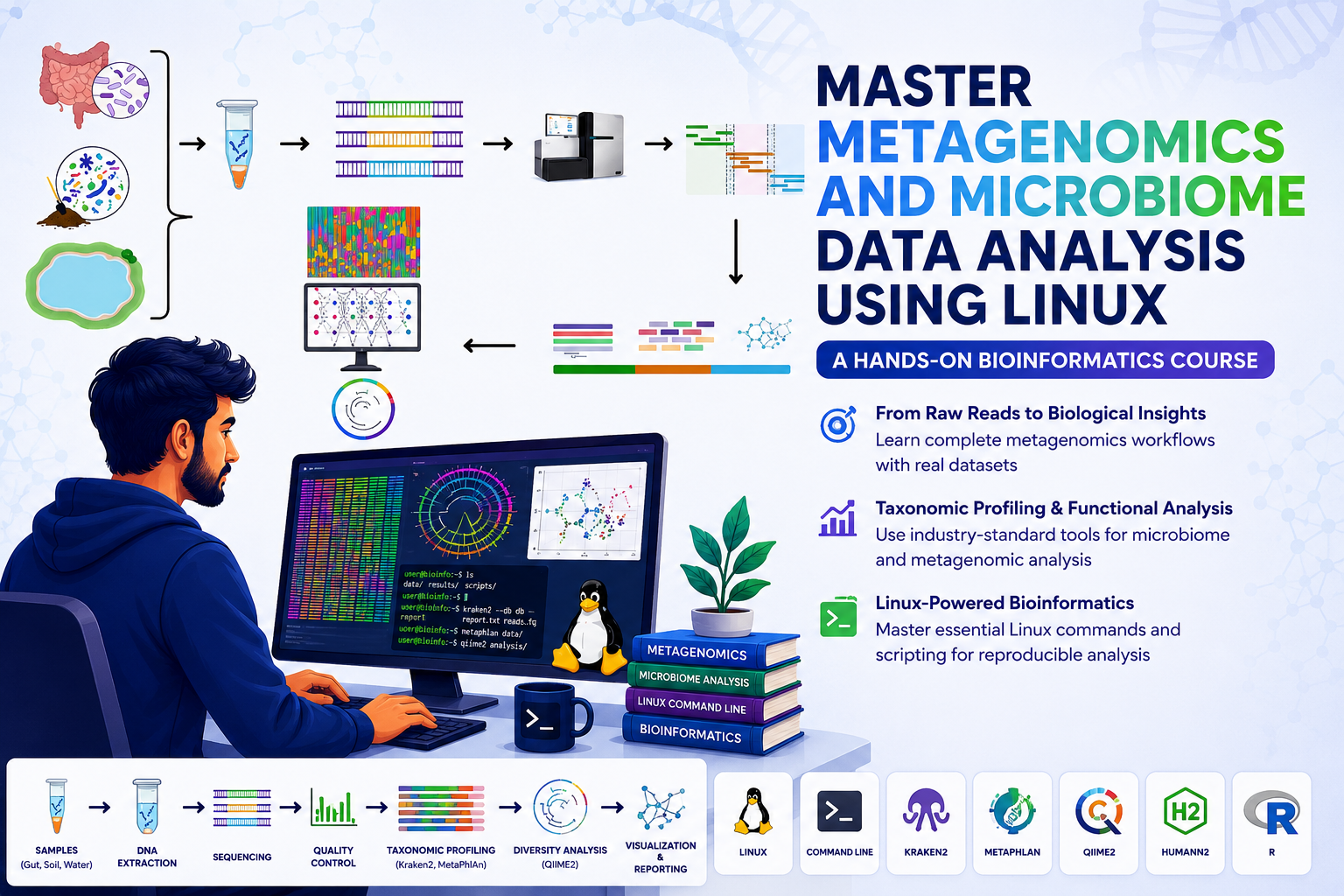
✅ Master Metagenomics and Microbiome Data Analysis Using Linux
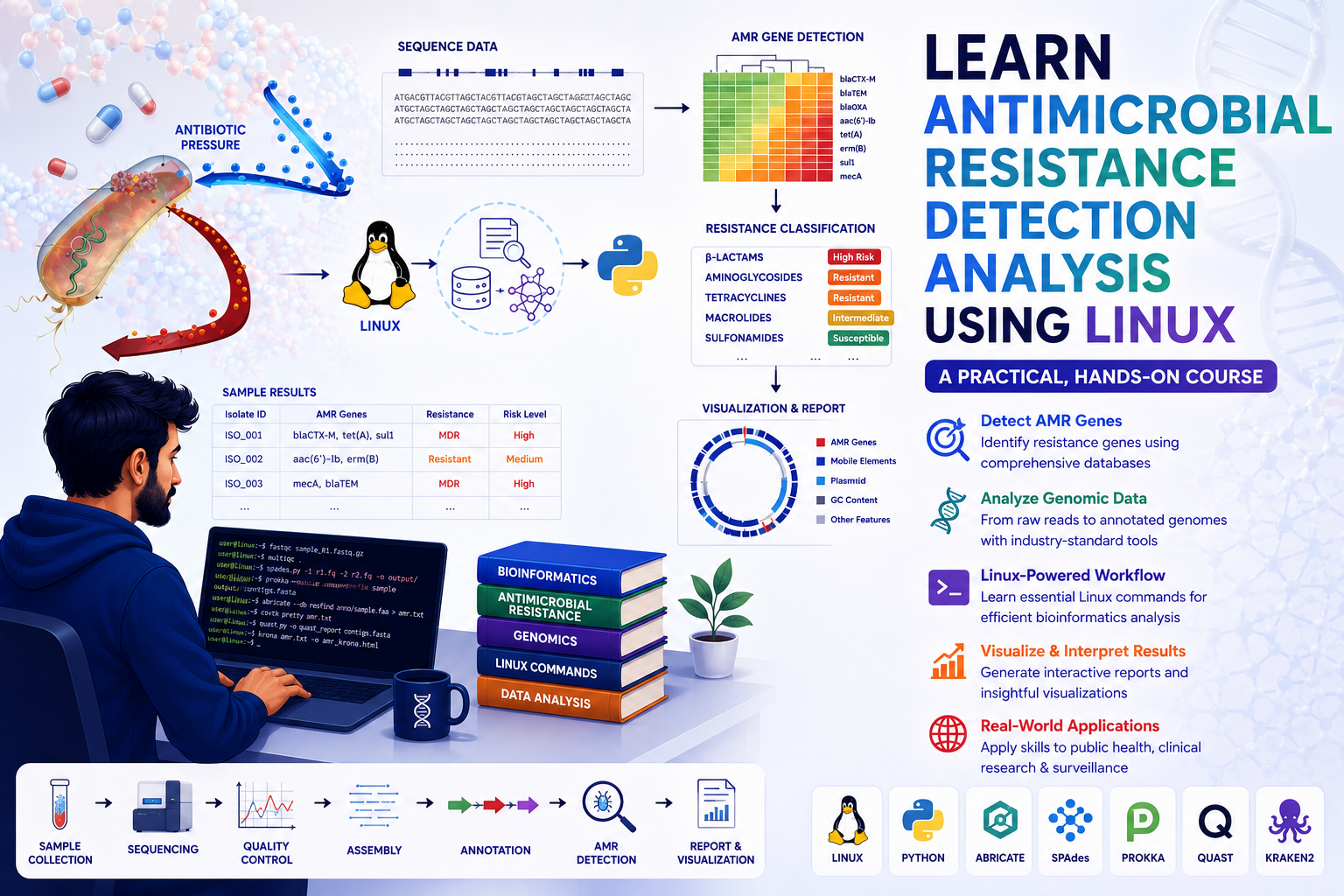
✅ Learn Antimicrobial Resistance Detection (AMR) Analysis Using Linux
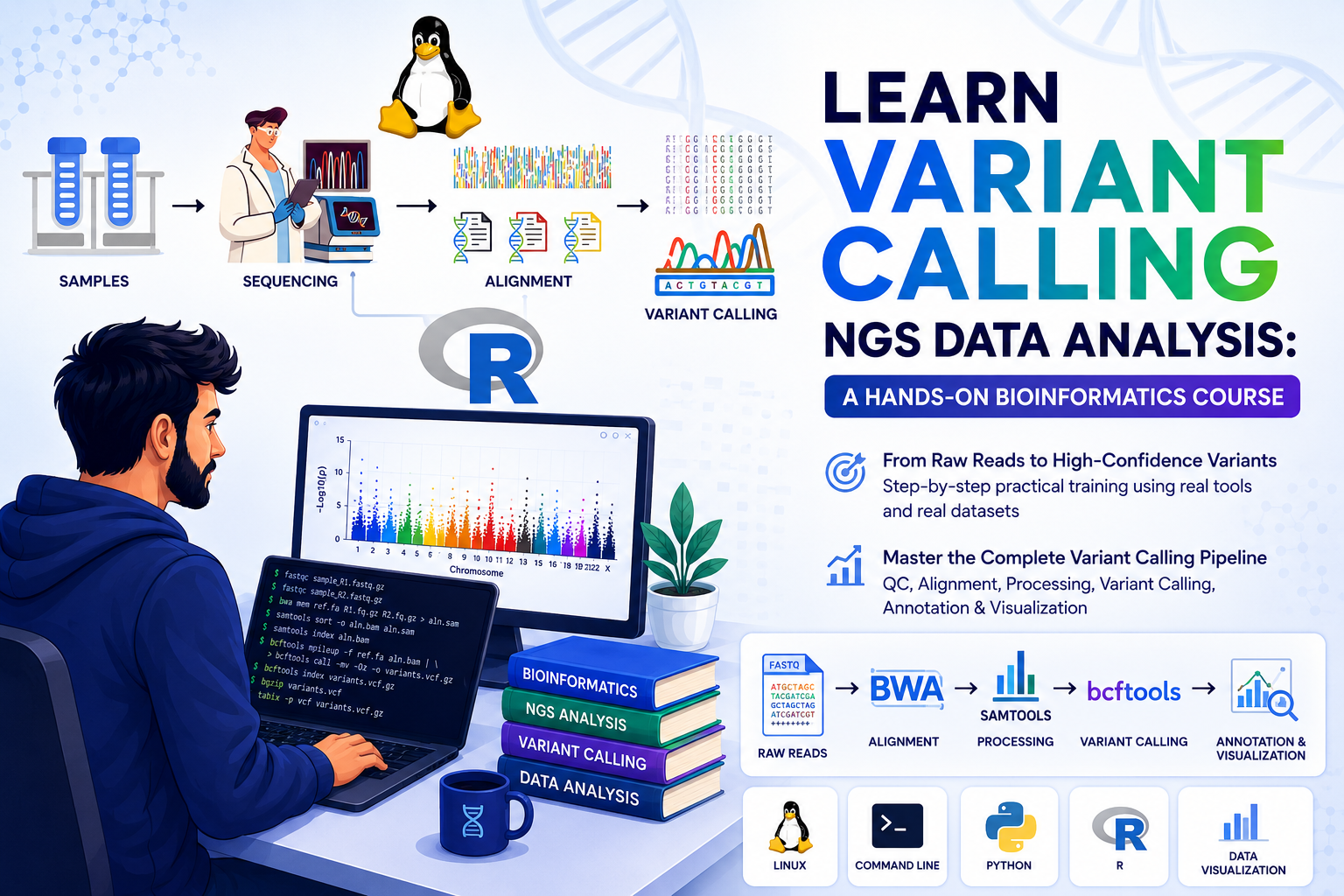
✅ Learn Variant Calling NGS Data Analysis: A Hands-on Bioinformatics Course
What You’ll Learn
✔ Perform genome assembly using short-read and long-read sequencing data
✔ Assemble microbial and eukaryotic genomes using SPAdes and Flye
✔ Assess assembly quality using Quast and other evaluation tools
✔ Perform structural and functional genome annotation
✔ Annotate genomes using Prokka, BLAST, HMMER, and AUGUSTUS
✔ Understand genome organization, gene prediction, and functional characterization
✔ Analyze microbiome datasets using QIIME2
✔ Perform taxonomic classification of microbial communities
✔ Calculate alpha and beta diversity metrics
✔ Conduct differential abundance analysis on microbiome datasets
✔ Analyze shotgun metagenomics data using Kraken2 and Bracken
✔ Visualize microbial communities using Krona
✔ Interpret microbiome composition and abundance profiles
✔ Understand the biology and mechanisms of antimicrobial resistance (AMR)
✔ Detect AMR genes using ABRicate and multiple resistance databases
✔ Work with CARD, ResFinder, and NCBI AMR databases
✔ Build automated AMR analysis pipelines using Linux workflows
✔ Perform genomic variant calling from NGS datasets
✔ Detect SNPs and InDels using industry-standard variant calling tools
✔ Process FASTQ, SAM, BAM, and VCF files
✔ Perform read alignment and genome indexing
✔ Interpret variants and their biological significance
✔ Work with real-world microbial and genomic datasets
✔ Build reproducible bioinformatics workflows using Linux
✔ Gain practical skills used in microbiology, genomics, biotechnology, and public health research
✔ Complete portfolio-ready projects for academic and industry careers
Ideal For
- Microbiology Students and Researchers
- Bioinformatics Professionals
- Genomics Researchers
- Public Health Scientists
- Infectious Disease Researchers
- Biotechnology Professionals
- MSc and PhD Students
- Microbiome Researchers
- Clinical Genomics Scientists
- Anyone interested in microbial genomics and genome analysis
Career Pathways
- Microbial Genomics Analyst
- Bioinformatics Scientist
- Public Health Genomics Researcher
- Microbiome Data Analyst
- Infectious Disease Genomics Specialist
- Biotechnology Research Associate
- Clinical Bioinformatics Analyst
- Computational Microbiologist
Master the complete microbial genomics workflow from raw sequencing reads to genome assembly, microbiome analysis, AMR detection, and variant interpretation.
Courses in the Bundle (4)
Get Certified in Bioinformatics
Showcase your achievement with a certificate recognized by students and researchers worldwide.