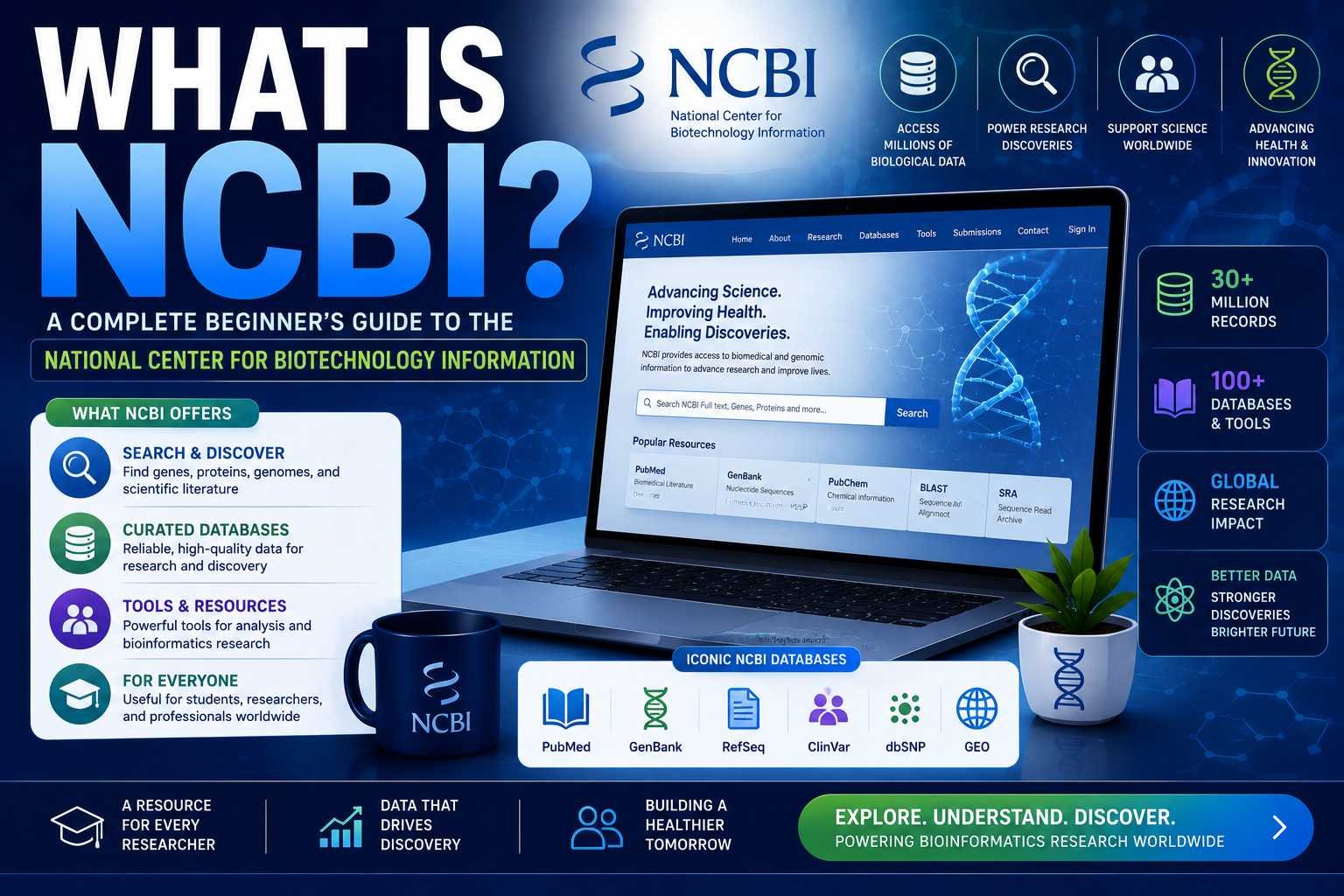
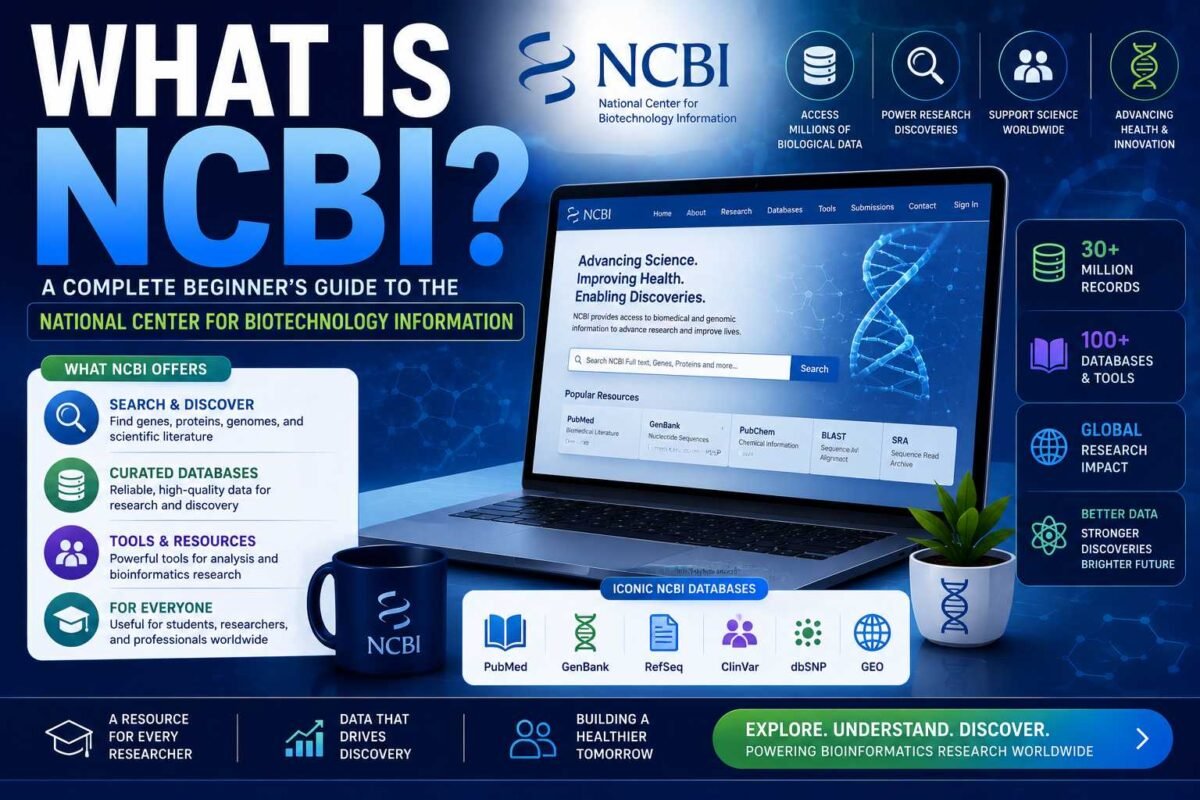
What is NCBI? If you’re beginning your journey in bioinformatics, you’ve probably come across the National Center for Biotechnology Information (NCBI). It is one of the world’s largest and most trusted repositories of biological data, providing researchers, students, and healthcare professionals with free access to millions of DNA sequences, protein sequences, genomes, scientific publications, and clinical datasets.
Whether you’re studying genetics, genomics, transcriptomics, microbiology, or molecular biology, learning how to use NCBI is an essential skill. In this comprehensive guide, you’ll discover what NCBI is, why it’s important, the major databases it hosts, and how beginners can use it effectively for research and learning.
What Is NCBI?
The National Center for Biotechnology Information (NCBI) is a division of the U.S. National Library of Medicine (NLM), which is part of the National Institutes of Health (NIH).
Founded in 1988, NCBI was established to collect, organize, and distribute biological information to researchers around the world. Today, it serves millions of users by providing free access to biological databases, scientific literature, computational tools, and educational resources.
Researchers use NCBI to:
- Search DNA and RNA sequences
- Retrieve protein sequences
- Access complete genomes
- Find scientific publications
- Compare biological sequences
- Study genetic variation
- Analyze sequencing datasets
For anyone entering bioinformatics, NCBI is one of the first platforms you should learn to use.
Why Is NCBI Important?
Modern biological research generates enormous amounts of data every day.
Without centralized databases, sharing and accessing this information would be nearly impossible.
NCBI solves this problem by providing:
- Free public biological databases
- Standardized biological information
- Powerful search tools
- Sequence analysis software
- Research publications
- Genomic resources
- Clinical genetics databases
Almost every bioinformatics workflow uses NCBI at some stage.
Major Databases Available in NCBI
NCBI hosts dozens of specialized databases.
Let’s explore the most important ones.
GenBank
GenBank is one of the world’s largest nucleotide sequence databases.
Researchers submit DNA and RNA sequences from thousands of organisms every day.
GenBank contains:
- Gene sequences
- Whole genomes
- Viral genomes
- Bacterial genomes
- Plant genomes
- Animal genomes
Future Article:
GenBank Complete Guide
PubMed
PubMed is the world’s largest biomedical literature database.
Researchers use PubMed to:
- Search scientific papers
- Read research abstracts
- Find review articles
- Explore clinical studies
Before beginning any research project, scientists usually perform a PubMed literature search.
Future Article:
How to Use PubMed Effectively
BLAST
BLAST (Basic Local Alignment Search Tool) allows researchers to compare biological sequences against millions of known sequences.
Applications include:
- Species identification
- Gene annotation
- Evolutionary analysis
- Sequence similarity searches
Future Article:
BLAST Tutorial for Beginners
Gene Database
The Gene database provides detailed information about genes from thousands of organisms.
Each gene entry typically includes:
- Gene symbol
- Gene description
- Genomic location
- Protein products
- References
- Associated diseases
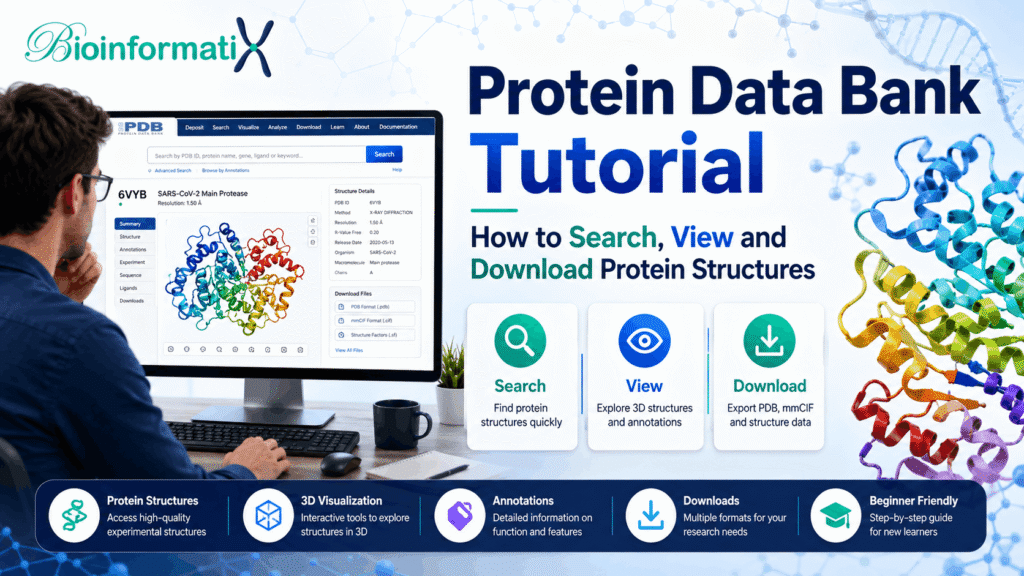
Protein Database
NCBI Protein stores protein sequences from multiple sources.
Researchers use it to:
- Retrieve protein sequences
- Study protein function
- Compare proteins across species
Genome Database
The Genome database provides complete genome assemblies.
Applications include:
- Comparative genomics
- Genome annotation
- Evolutionary studies
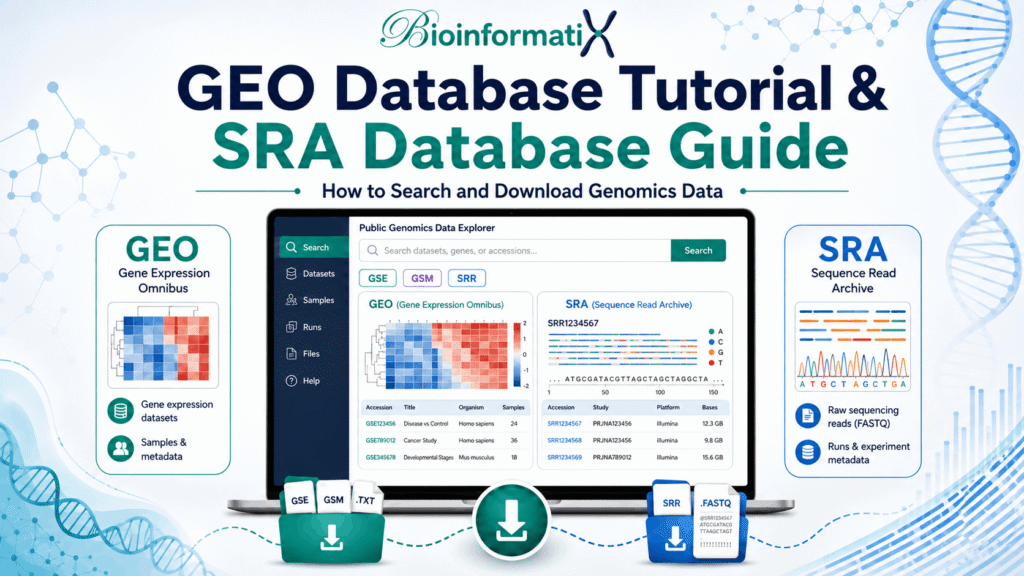
Sequence Read Archive (SRA)
SRA stores raw sequencing data generated by next-generation sequencing experiments.
Researchers can download sequencing datasets for:
- RNA-Seq
- Whole Genome Sequencing
- ChIP-Seq
- Metagenomics
- Single-cell RNA sequencing
Future Article:
Complete Guide to SRA
Gene Expression Omnibus (GEO)
GEO contains functional genomics datasets.
Popular dataset types include:
- Microarray
- RNA-Seq
- Methylation
- ChIP-Seq
Researchers frequently use GEO for biomarker discovery and differential gene expression analysis.
Future Article:
GEO Database Tutorial
dbSNP
dbSNP stores genetic variants including:
- SNPs
- Insertions
- Deletions
These data are widely used in genetics and clinical research.
ClinVar
ClinVar connects genetic variants with clinical significance.
Healthcare professionals use ClinVar to study disease-associated mutations.
Taxonomy Database
The Taxonomy database organizes organisms into a standardized biological classification.
It helps researchers identify species and retrieve organism-specific data.
How Researchers Use NCBI
NCBI is used across many research areas.
Genomics
Researchers retrieve genome sequences and annotations.
Transcriptomics
Scientists download RNA-Seq datasets from GEO and SRA.
These datasets are analyzed using tools such as STAR, HISAT2, featureCounts, and DESeq2.
If you’d like to perform practical RNA-Seq analysis, explore our course:
Hands-on RNA-Seq Analysis: Crash Course from FASTQ to DEGs
https://bioinformatix.co/courses/hands-on-rna-seq-analysis-crash-course-from-fastq-to-degs/
Protein Bioinformatics
Researchers obtain protein sequences before performing:
- Structure prediction
- Functional annotation
- Protein family analysis
- Molecular docking
Our Protein Bioinformatics Masterclass: Sequence Analysis, Structure Prediction, Modeling & Proteomics provides practical training in these techniques.
Genome Assembly
Genome assemblies available through NCBI support comparative genomics and annotation studies.
To learn practical genome assembly, explore:
Learn Genome Assembly and Annotation in Prokaryotes and Eukaryotes
https://bioinformatix.co/courses/learn-genome-assembly-and-annotation-in-prokaryotes-and-eukaryotes/
Learn Biological Databases with BioInformatix
If you’re completely new to NCBI and biological databases, we recommend starting with our free course:
Introduction to Biological Databases for Bioinformatics
In this beginner-friendly course, you’ll learn:
- What biological databases are
- How to search NCBI
- Using GenBank
- Exploring UniProt
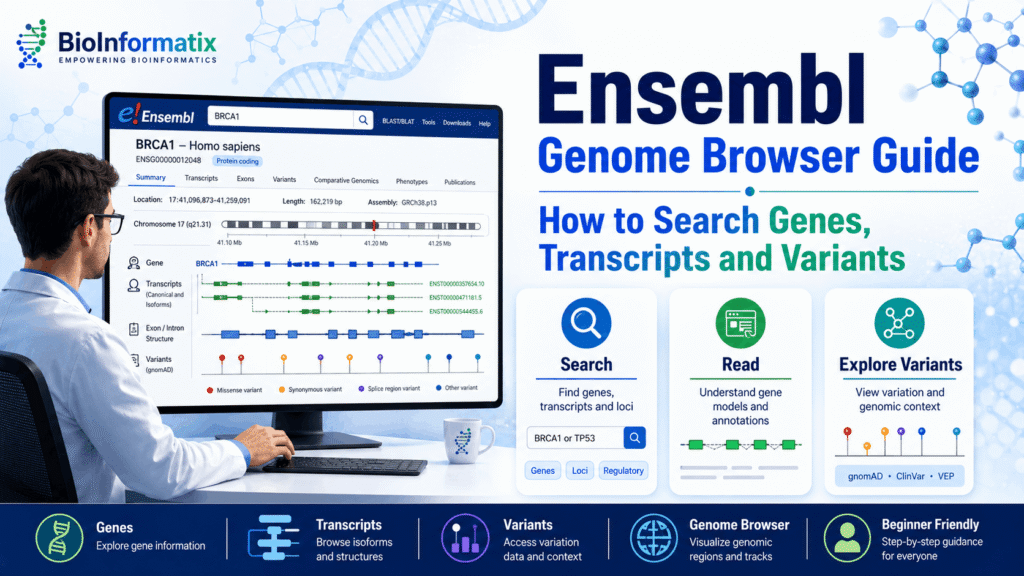
- Working with Ensembl
- Understanding GEO and SRA
- Finding genomic and protein information
Start Learning Free:
https://bioinformatix.co/courses/introduction-to-biological-databases-for-bioinformatics/
Recommended Learning Roadmap
To master biological databases, we recommend following this sequence:
Step 1
Learn the basics of bioinformatics.
Start From this Masterclass that will take a begginer bioinformatician to intermidate within months of learning:
Learn Bioinformatics from Beginner to Master Through Real World Projects
Step 2
Understand career pathways.
Read:
Bioinformatics Career Roadmap (2026)
Step 3
Complete our free course:
Roadmap to Bioinformatics: A Beginner’s Guide to Careers, Skills & Learning Path
Step 4
Complete:
Introduction to Biological Databases for Bioinformatics
https://bioinformatix.co/courses/introduction-to-biological-databases-for-bioinformatics/
Step 5
Learn Linux.
Complete:
Linux Command Line Essentials for Bioinformatics
https://bioinformatix.co/courses/linux-command-line-essentials-for-bioinformatics/
Step 6
Develop practical programming skills.
Complete:
Learn Bioinformatics Data Analysis: Master Python, Linux and R Scripting
Step 7
Apply your skills to real-world research.
Complete:
Learn Bioinformatics: Beginner to Master Through Real-World Projects
Common Mistakes Beginners Make
Many beginners:
- Search without using filters.
- Ignore accession numbers.
- Download incorrect sequence formats.
- Confuse GenBank with RefSeq.
- Don’t verify sequence annotations.
- Forget to cite database records.
Learning how NCBI organizes information will help you avoid these mistakes.
Frequently Asked Questions
Is NCBI free?
Yes. All major NCBI databases and tools are freely accessible to researchers, students, and educators worldwide.
Who maintains NCBI?
NCBI is maintained by the National Center for Biotechnology Information, part of the U.S. National Library of Medicine and the National Institutes of Health.
Can beginners use NCBI?
Absolutely. Although the platform contains a vast amount of information, beginners can quickly learn the basics with practice and structured guidance.
Which NCBI database should I learn first?
Most beginners should start with:
- PubMed
- GenBank
- Gene
- Protein
- BLAST
before exploring GEO, SRA, ClinVar, and other specialized resources.
Final Thoughts
The National Center for Biotechnology Information (NCBI) is one of the most valuable resources in modern biology and bioinformatics. From DNA sequences and protein databases to scientific publications and genomic datasets, NCBI provides the foundation for countless research projects worldwide.
By learning how to navigate NCBI effectively, you’ll build a skill that supports nearly every area of bioinformatics—from genomics and transcriptomics to protein analysis and precision medicine. Combine your knowledge of NCBI with programming, Linux, and hands-on bioinformatics workflows, and you’ll be well prepared for academic research and industry careers.