Learn Bioinformatics Data Analysis: Master Python, Linux and R Scripting
About Course
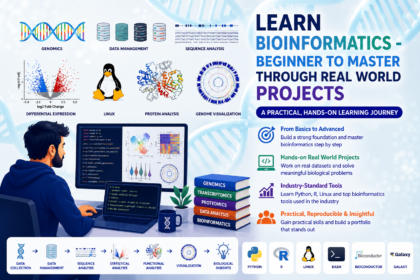
In today’s rapidly evolving world of genomics, bioinformatics, and computational biology, the ability to analyze and interpret vast amounts of biological data has become a crucial skill. From sequencing genomes to studying gene expression, the tools and techniques in bioinformatics are essential for answering complex biological questions and advancing research. If you’re interested in learning how to leverage computational methods for biological analysis, this course is designed for you.
“Learn Bioinformatics Data Analysis: Master Python, Linux & R” is a comprehensive, hands-on course designed to teach you the foundational skills and techniques needed to process, analyze, and visualize genomic data. Whether you’re an aspiring bioinformatician, a life science student, or a researcher looking to enhance your data analysis capabilities, this course will provide you with the tools and knowledge necessary to succeed in the world of bioinformatics.
This course takes a multi-faceted approach by teaching you three key components: Python programming, Linux operating systems, and R for bioinformatics. These are the core tools that drive bioinformatics workflows today, and by mastering them, you’ll gain the ability to handle everything from basic sequence analysis to complex RNA-Seq data analysis.
What You Will Learn:
Throughout this course, you will:
Master Python for Bioinformatics:
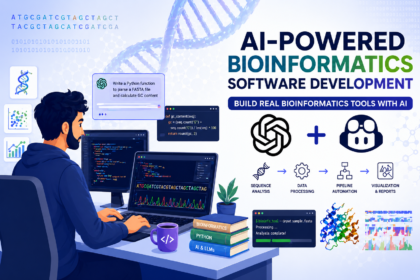
Learn Python from the ground up, starting with basic concepts like variables, loops, and conditionals, and moving towards advanced bioinformatics applications.
Use the Biopython library to work with biological data, including DNA, RNA, and protein sequences.
Understand how to read and manipulate FASTQ files, perform sequence alignment, and use the BLAST tool programmatically.
Explore various data formats in bioinformatics, including FASTA, GFF, and VCF, and learn how to process these formats efficiently.
Learn to visualize biological data with Python, using libraries like Matplotlib and Seaborn, to create insightful visualizations of genomic sequences and alignments.
Become Proficient in Linux for Bioinformatics:
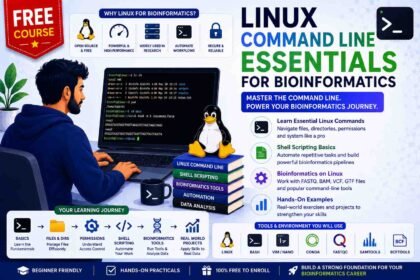
Master the basics of the Linux command line, an essential skill for anyone working in bioinformatics.
Learn to navigate the Linux file system, manage files and directories, and automate tasks using Bash scripting.
Understand how to install and manage bioinformatics tools and software packages in a Linux environment, a common setup in computational biology labs.
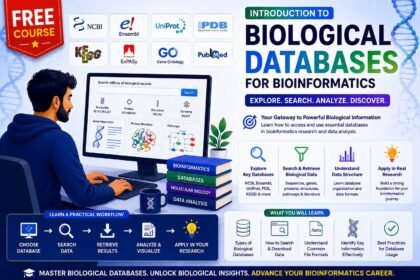
Learn how to retrieve data from biological databases using command-line tools, such as wget and curl, and process this data efficiently.
Gain Expertise in RNA-Seq Data Analysis Using Linux:
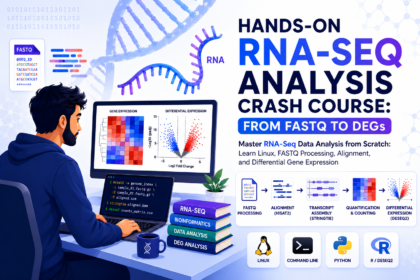
Dive deep into RNA-Seq, one of the most powerful techniques in genomics today, and learn the entire pipeline from data preprocessing to alignment and quantification.
Learn how to preprocess RNA-Seq data, including quality control, trimming, and adapter removal using tools like FastQC and Trimmomatic.
Understand how to align RNA-Seq reads to a reference genome using alignment tools like STAR or HISAT2, and quantify gene expression using featureCounts or HTSeq.
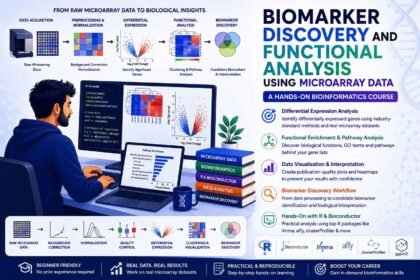
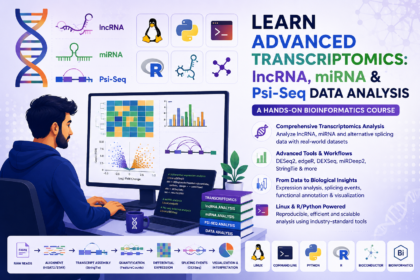
Learn how to interpret the results from RNA-Seq analysis, identify differentially expressed genes, and visualize the outcomes using tools such as DESeq2 and edgeR.
Utilize R for Bioinformatics:
Learn how to set up R and RStudio for bioinformatics data analysis, and explore the data structures in R such as vectors, matrices, and data frames.
Learn to work with bioinformatics datasets in R, including importing, cleaning, and manipulating biological data.
Master the use of R for statistical analysis in bioinformatics, including performing differential expression analysis and Gene Set Enrichment Analysis (GSEA).
Visualize genomic data using ggplot2, a powerful visualization package in R, to create plots like volcano plots, heatmaps, and PCA plots that can help in interpreting gene expression data.
Course Structure:
The course is divided into four major sections, each covering a specific area of bioinformatics and computational biology. Here’s what you can expect from each section:
Section 1: Python for Bioinformatics
This section covers the basics of Python and introduces Biopython, a library specifically designed for bioinformatics applications. By the end of this section, you will be able to manipulate biological sequences, work with various data formats, and perform tasks like sequence alignment and BLAST searches using Python.
Key Topics:
Introduction to Python programming
Basic sequence operations with Biopython
Working with FASTQ files and filtering data
Sequence alignment algorithms and tools
Performing BLAST searches with Biopython
Visualizing genomic data with Python
Section 2: Linux for Bioinformatics
Linux is the backbone of most bioinformatics workflows. In this section, you’ll learn to navigate the Linux file system, use command-line tools to manipulate data, and automate bioinformatics tasks with Bash scripts.
Key Topics:
Introduction to Linux and basic commands
Navigating the Linux file system
Text file manipulation and data extraction
Installing and managing bioinformatics tools on Linux
Scripting with Bash to automate bioinformatics tasks
Retrieving biological data from online databases
Section 3: RNA-Seq Data Analysis Using Linux
This section focuses on RNA-Seq, a widely used method to study gene expression. You will learn how to preprocess RNA-Seq data, align it to a reference genome, and quantify gene expression using various bioinformatics tools.
Key Topics:
Introduction to RNA-Seq and its applications
Quality control of RNA-Seq data using FastQC
Preprocessing RNA-Seq data with Fastp
Aligning RNA-Seq data using Bwa
Quantifying gene expression with featureCounts
Visualizing differential expression results
Section 4: R for Bioinformatics
In this section, you’ll gain expertise in using R for bioinformatics data analysis. You’ll learn how to visualize, analyze, and interpret large biological datasets, including RNA-Seq data, and conduct statistical analyses to derive meaningful insights.
Key Topics:
Setting up R and RStudio
Data manipulation and analysis in R
Differential gene expression analysis with DESeq2 and edgeR
Visualizing genomic data using ggplot2
Performing Gene Set Enrichment Analysis (GSEA) in R
Who Is This Course For?
This course is ideal for anyone interested in bioinformatics and data science, including:
Aspiring bioinformaticians looking to break into the field of genomics and computational biology.
Biology and life science students who want to gain computational skills for data analysis.
Researchers and scientists involved in genomics, transcriptomics, or proteomics who need to process large biological datasets.
Data analysts and statisticians wanting to expand their skill set into bioinformatics.
You don’t need prior programming or bioinformatics experience to start this course, as it is designed to accommodate beginners. However, a basic understanding of biology and genetics will help you contextualize the data you’ll be working with.
Why Take This Course?
Comprehensive Learning: This course covers the essential tools and techniques needed for bioinformatics data analysis. By the end, you’ll be proficient in Python, Linux, and R—three of the most widely used tools in bioinformatics.
Hands-On Projects: Throughout the course, you will work on real-world bioinformatics projects and datasets, which will help you gain practical experience in the field.
Career Advancement: Bioinformatics is a rapidly growing field with applications in medicine, biotechnology, and environmental science. By mastering these skills, you’ll position yourself for opportunities in research, academia, and industry.
Beginner-Friendly: Even if you have no prior experience in programming or bioinformatics, this course will guide you step by step through the essential concepts and tools.
Enroll now and take your first step toward mastering bioinformatics data analysis using Python, Linux, and R!
Course Content
Python for Bioinformatics
Introduction To Python And Biopython
09:07Setting Up Python Environment
13:09Basic Sequence Operations In Biopython
23:41Working With FASTQ Files
13:11Accessing Databases Using Biopython
15:00Sequence Alignment Using Biopython
10:11BLAST In Biopython
08:44Genomics Analysis Using Biopython
10:13Covid-19 Protein Structure BLAST
07:19Visualization Of Covid Protein
05:05Motif Objects In Biopython
04:07Visualizing Techniques In Biopython
04:48Indexing A Large File Using Biopython
04:40Sorting Sequences Files
03:20Quality Filtering Of FASTQ Files
04:13Project 1 : Python for Bioinformatics
Linux for Bioinformatics
Practical Use Case: RNA-Seq Data Analysis Using Linux
R for Bioinformatics
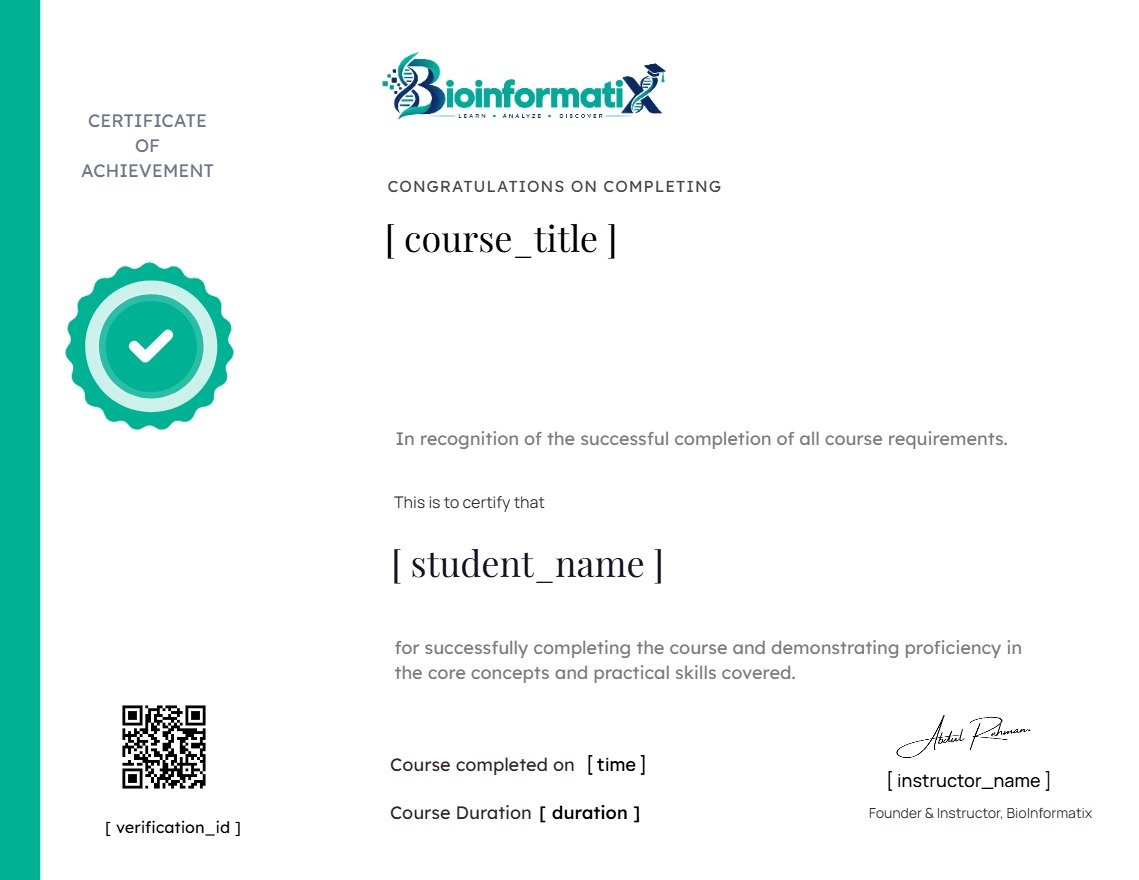
Get Certified in Bioinformatics
Showcase your achievement with a certificate recognized by students and researchers worldwide.
Student Ratings & Reviews

Your Instructor

Abdul Rehman Ikram
Bioinformatician | Data Analyst | Computational BiologistAbdul is a distinguished bioinformatician, data analyst, and computational biologist known for his exceptional contributions to the field of biomedical research. With a passion for integrating technology and biology, Abdul has carved a niche for himself, leveraging cutting-edge computational techniques to unravel complex biological data.
Driven by a curiosity to decode the complexities of life, Abdul believes in the power of interdisciplinary approaches. He is committed to mentoring the next generation of scientists, fostering a culture of innovation and continuous learning.