Linux Command Line Essentials for Bioinformatics
About Course
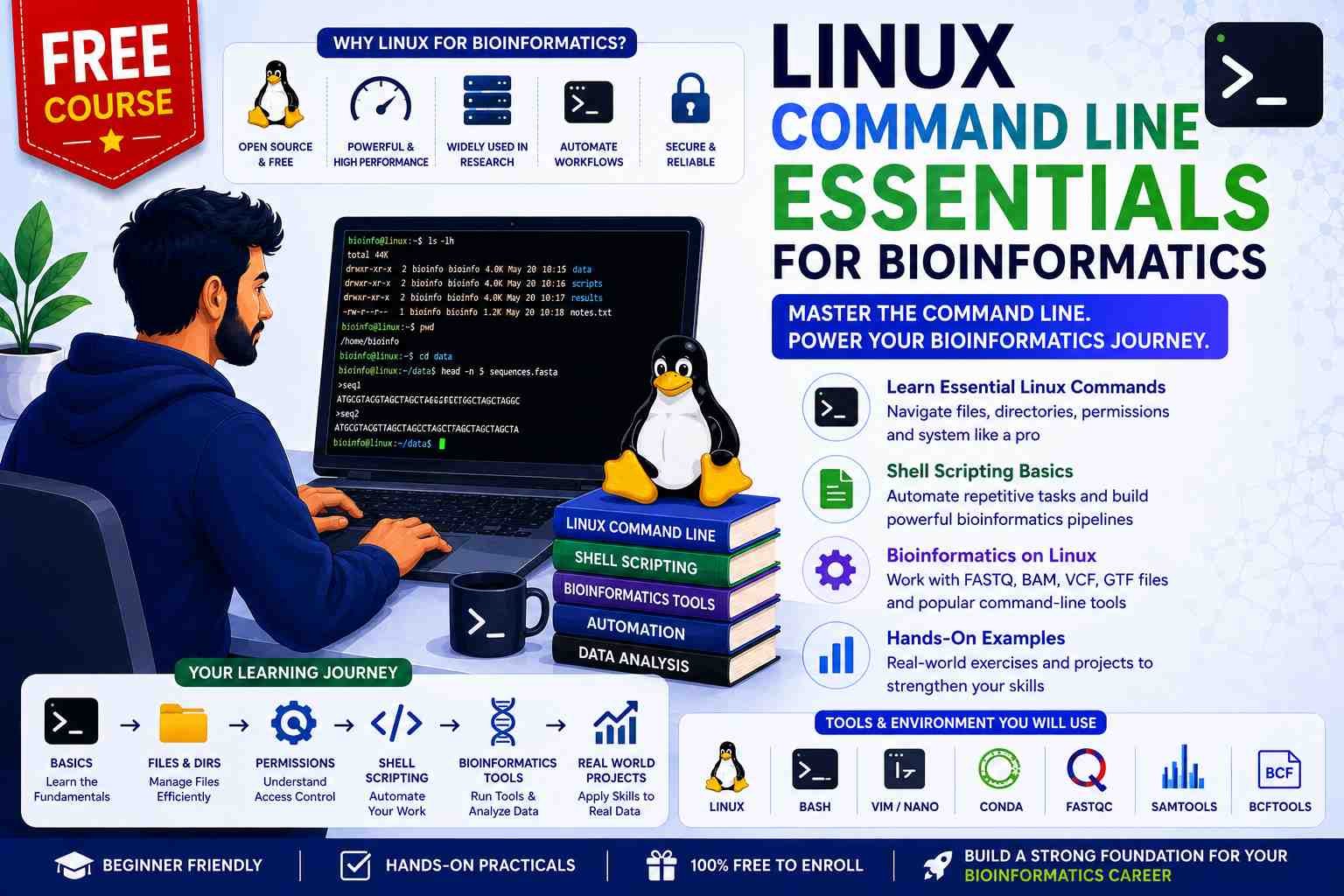
The Linux command line is one of the most essential skills for every bioinformatician. Most modern bioinformatics software, sequencing pipelines, and high-performance computing environments rely on Linux and Bash.
In this beginner-friendly course, you’ll learn why Linux is the preferred operating system for bioinformatics, understand basic Bash commands, and explore commonly used bioinformatics tools available through the command line.
You’ll also gain practical experience with sequence alignment using BLAST, perform phylogenetic tree construction, and learn how Linux forms the backbone of modern computational biology workflows.
By the end of this course, you’ll have the confidence to navigate Linux, execute basic commands, and prepare for more advanced bioinformatics analyses.
What You’ll Learn
- Understand why Linux is essential for bioinformatics
- Navigate the Linux command line with confidence
- Learn the most important Bash commands
- Use NCBI E-utilities from the terminal
- Perform sequence alignment using BLAST
- Construct phylogenetic trees
- Explore commonly used bioinformatics software
- Prepare for advanced Linux-based bioinformatics pipelines
Requirements
- No Linux experience required
- No programming experience required
- Basic biology knowledge is helpful but not necessary
Who This Course Is For
- Bioinformatics beginners
- Biology and Biotechnology students
- Genetics and Molecular Biology students
- Researchers transitioning to computational biology
- Anyone interested in learning Linux for scientific research
Course Content
Getting Started with Linux for Bioinformatics
Introduction to Linux
18:40Bash Basic Commands
15:47Essential Bioinformatics Tools
09:10Using NCBI E-Utilities from Bash
16:43Sequence Alignment Using BLAST
05:59Phylogenetic Tree Construction
05:59
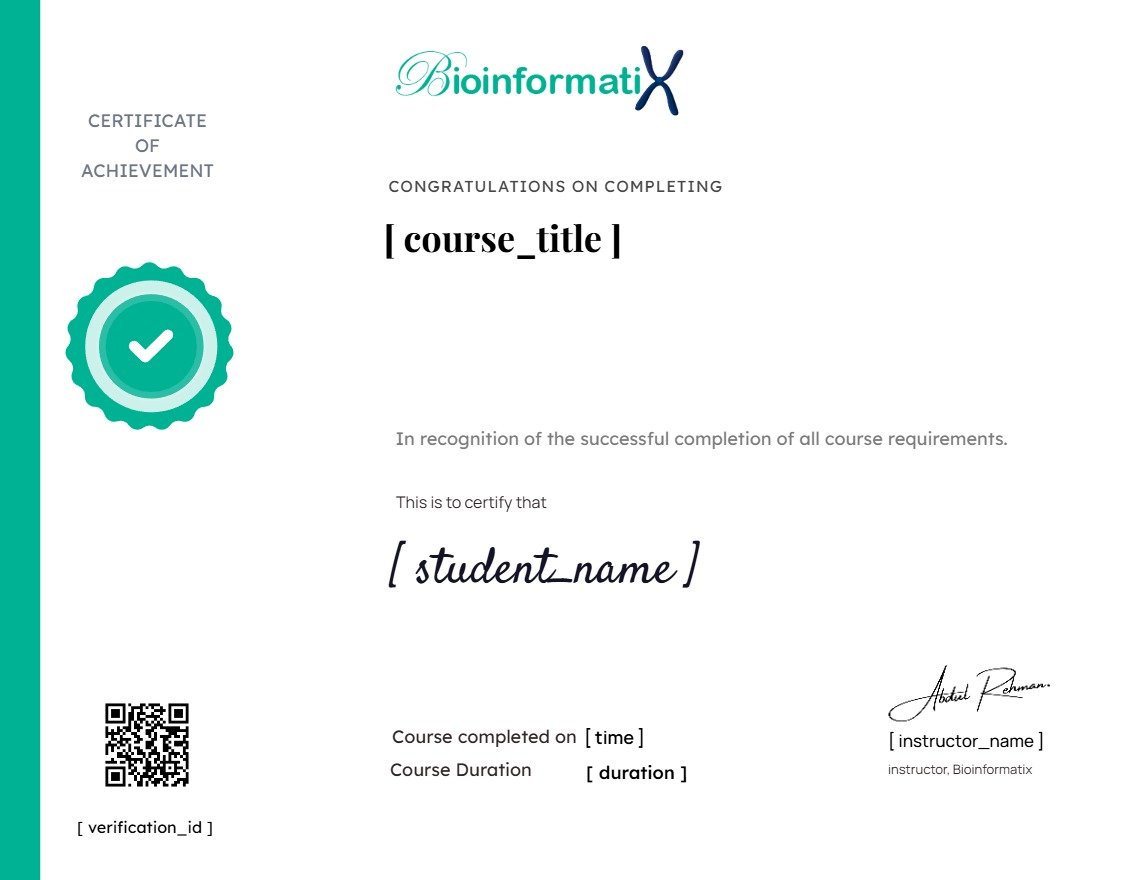
Get Certified in Bioinformatics
Showcase your achievement with a certificate recognized by students and researchers worldwide.
Student Ratings & Reviews
Your Instructor

Abdul Rehman Ikram
Bioinformatician | Data Analyst | Computational BiologistAbdul is a distinguished bioinformatician, data analyst, and computational biologist known for his exceptional contributions to the field of biomedical research. With a passion for integrating technology and biology, Abdul has carved a niche for himself, leveraging cutting-edge computational techniques to unravel complex biological data.
Driven by a curiosity to decode the complexities of life, Abdul believes in the power of interdisciplinary approaches. He is committed to mentoring the next generation of scientists, fostering a culture of innovation and continuous learning.